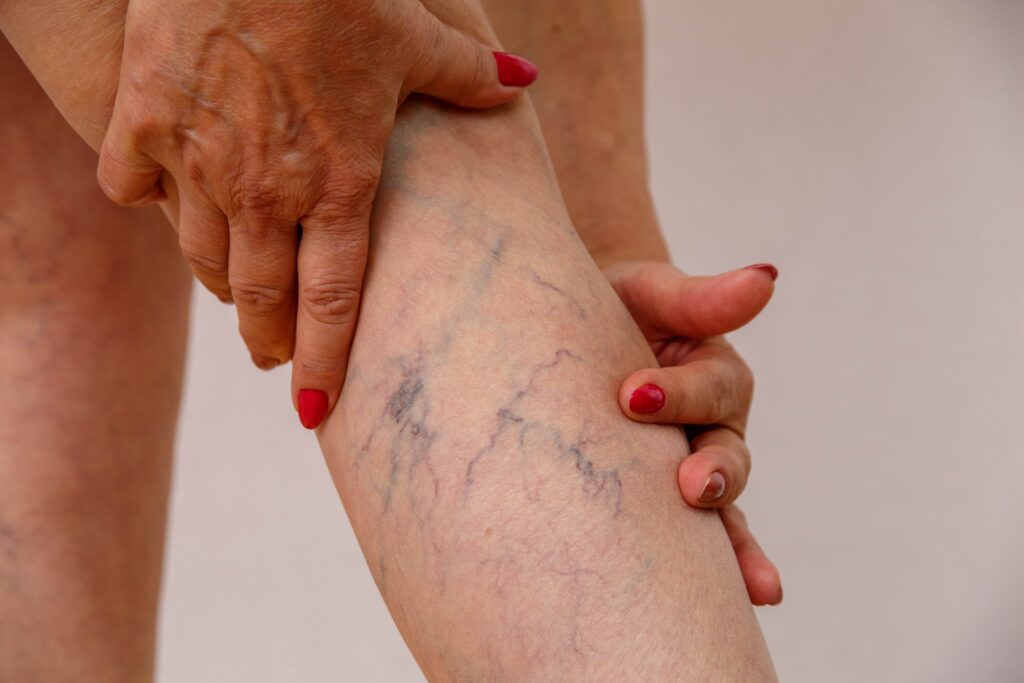
The Cause of Spider Veins
Spider veins are caused by a backup of blood that can result from hormone changes, exposure to the sun, or an injury. They are often found in the legs because of the intense pressure on the veins to carry blood back up to the heart.
Other factors such as age, heredity, and hormonal changes such as pregnancy can also increase your risk of having spider veins, so it is important to take preventative measures.
Preventing Spider Veins
Some steps you can take to prevent spider veins from occurring include:
- Wearing sunscreen regularly
- Exercising consistently and maintaining a healthy weight, which can help reduce the pressure put on the veins in your legs
- Taking breaks from either sitting or standing for long periods
- Limiting the amount of time you wear high heels, or shoes with steep inclines
Common Symptoms of Spider Veins
According to Mayo Clinic Aside from their discolored nature, spider veins on legs may also cause symptoms including aching, burning sensations, or itchiness. Though generally considered harmless, spider vein symptoms may cause discomfort, especially after an extended period of standing.
Many people find that the cosmetic impact of spider veins causes feelings of self-consciousness, promoting changes in lifestyle and clothing choice. Prompt treatment at the sight of spider veins can help improve the appearance and ensure that symptoms do not worsen over time.